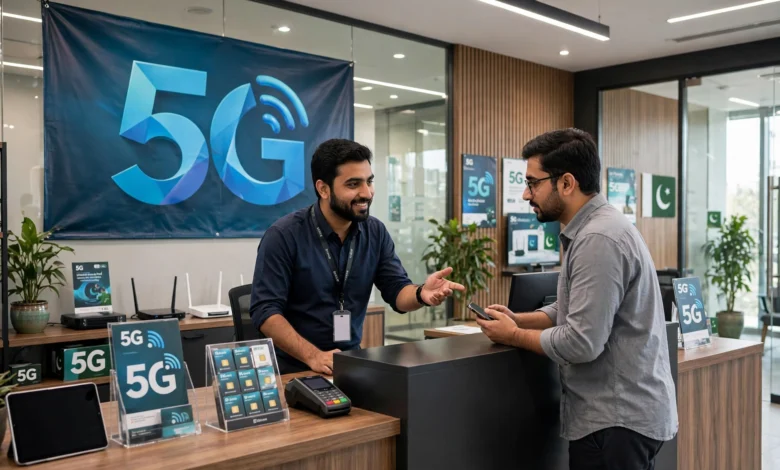
5G internet packages in Pakistan are one of the most searched topics among mobile and broadband users right now, and for good reason. As data consumption keeps climbing, from video streaming to remote work to online gaming, people want to know when true 5G speeds will actually be available in their city, what it will cost, and how it compares to the 4G and 4.5G plans they’re already using.
The truth is, Pakistan’s 5G journey has been slower than many neighboring countries, mostly due to spectrum auction delays and infrastructure costs. But that doesn’t mean nothing is happening. Telecom operators including Jazz, Zong, Telenor, and Ufone have already run 5G trials in major cities, and they’re actively rolling out high-speed 4.5G and LTE-A packages that are being marketed as “5G-ready” while the country prepares for full commercial launch.
In this guide, we’ll walk through where Pakistan actually stands on 5G today, what packages are available right now that give you the closest experience to 5G speeds, what to expect once full 5G internet packages in Pakistan go live, and how to pick a plan that won’t leave you disappointed. Whether you’re a student trying to stream lectures without buffering or a business owner who needs reliable connectivity, this article breaks down everything in plain language, no technical jargon required.
What Is 5G and Why It Matters for Pakistan
5G is the fifth generation of mobile network technology, and it’s built to do more than just make your internet faster. It offers three big improvements over 4G:
- Higher speeds – potentially 10 to 20 times faster than 4G under ideal conditions
- Lower latency – meaning less lag, which matters for gaming, video calls, and real-time applications
- Greater capacity – more devices can connect to the same tower without slowing each other down
For Pakistan, this matters because internet usage has grown massively over the past few years. According to data regularly published by the Pakistan Telecommunication Authority (PTA), the country now has well over 190 million cellular subscribers, and broadband penetration keeps rising every year. With that kind of demand, 5G internet packages in Pakistan aren’t just a nice-to-have, they’re becoming necessary infrastructure for the country’s digital economy, from e-commerce to freelancing to online education.
Current Status of 5G in Pakistan
Before we get into packages, it’s important to be honest about where things stand. Pakistan has not yet completed a nationwide commercial 5G spectrum auction, and rollout timelines have shifted multiple times over the past several years. Here’s a realistic picture of the current situation:
- Spectrum auction delays: The government and PTA have discussed and postponed the 5G spectrum auction on several occasions, citing valuation disagreements, macroeconomic pressures, and readiness concerns among operators.
- Trial runs completed: Jazz, Zong, Telenor, and Ufone have all conducted 5G trials in cities like Islamabad, Lahore, and Karachi, testing speeds that reportedly reached into the hundreds of Mbps in controlled environments.
- Infrastructure investment ongoing: Operators have been quietly upgrading towers and fiber backhaul in major cities, which is a necessary step before 5G can be switched on at scale.
- 4.5G/LTE-A as the bridge: In the meantime, telecom companies are pushing 4.5G (LTE-Advanced) packages that offer noticeably better speeds than standard 4G, positioning them as the practical alternative until 5G internet packages in Pakistan become widely available.
Because the situation changes fairly often, it’s worth checking the PTA’s official announcements page or your operator’s website for the latest confirmed rollout dates before making a decision based on 5G specifically.
5G-Ready Internet Packages by Pakistani Telecom Operators
While full 5G isn’t commercially live everywhere yet, each major operator has positioned certain high-speed packages as the closest thing to a 5G experience, often bundling them with 5G-compatible SIMs so customers are ready the moment the network switches on. Here’s how the big four compare.
Jazz 5G Readiness and High-Speed Packages
Jazz, Pakistan’s largest telecom operator, has been the most vocal about 5G trials, having demonstrated speeds in test environments in partnership with equipment vendors. Jazz currently offers:


- 4G and 4.5G packages with data caps ranging from a few GB for casual users up to unlimited-style bundles for heavy users
- 5G-ready SIM upgrades, allowing existing customers to switch their SIM in advance so no re-registration is needed later
- JazzFiber for home broadband, which delivers fiber-grade speeds as a wired alternative while mobile 5G matures
Zong 5G Trials and Current Offerings
Zong has also run high-profile 5G demonstrations, often citing some of the fastest recorded trial speeds in the country. For now, Zong customers can access:
- 4.5G Super Card bundles designed for heavy data users, including students and remote workers
- Device financing options that include 5G-compatible smartphones, making the eventual transition smoother
- Location-based coverage checkers on their app, so users can confirm what network generation is actually active in their area
Telenor and Ufone Positioning for 5G
Telenor (now merged into the PTCL Group alongside Ufone under a unified structure in many operational areas) and Ufone have taken a slightly more conservative public approach to 5G marketing, focusing instead on strengthening 4G coverage in underserved regions while participating in industry-wide spectrum discussions. Their current strategy includes:
- Expanding 4G tower density in rural and semi-urban areas
- Offering competitively priced data bundles aimed at value-conscious users
- Bundling fixed broadband (via PTCL) with mobile data for households that want a combined connectivity solution
How to Choose the Best 5G Internet Package in Pakistan
Since full 5G packages aren’t uniformly available yet, choosing the “best” option really means picking the plan that gives you the fastest, most reliable connection today while keeping you positioned for 5G later. Here’s what to actually check before signing up:
- Coverage in your specific area – A 5G-ready SIM means nothing if your neighborhood only has 4G towers. Use your operator’s coverage map or app.
- Data allowance vs. your actual usage – Don’t pay for 100GB if you use 15GB. Track your usage for a month before upgrading.
- Speed consistency, not just advertised peak speed – Ask friends or check community forums about real-world speeds in your city, not just marketing numbers.
- Device compatibility – Make sure your phone actually supports the bands being used (more on this below).
- Contract flexibility – Prefer packages that let you upgrade or downgrade monthly rather than locking you into a long-term plan before 5G is even confirmed in your city.
- Bundled value – Some packages include free minutes, SMS, or app-specific data (like social media or streaming bundles) that can add real value beyond raw speed.
Devices You Need for 5G in Pakistan
Even once 5G internet packages in Pakistan go fully live, your experience depends heavily on your device. Here’s what to keep in mind:
- 5G-compatible smartphone: Most mid-range and flagship phones released after 2021 support 5G bands, but always confirm the specific bands your operator plans to use, since not all “5G phones” support every regional frequency.
- 5G-ready SIM card: These are typically the same physical size as regular SIMs but are provisioned differently on the network side. Operators usually offer free or low-cost upgrades.
- Compatible routers for home use: If you’re looking at 5G as a home broadband replacement, you’ll eventually need a 5G-capable router or modem, similar to how 4G Wi-Fi routers work today.
Expected 5G Pricing and Package Trends
While official 5G pricing hasn’t been announced nationwide, industry patterns from other countries and statements from Pakistani operators give us a reasonable idea of what to expect:
- Tiered data plans: Expect similar structures to today’s 4.5G plans, likely with tiers based on GB allowance (for example, entry-level, mid-range, and unlimited-style heavy user plans)
- Premium pricing initially: 5G packages will likely launch at a premium compared to 4G, before becoming more competitive as adoption grows and infrastructure costs are recovered
- Bundled promotions: Expect launch-period offers combining 5G data with device discounts or free trial periods, a common strategy operators use globally to encourage early adoption
- Urban-first rollout: Prices and availability will almost certainly favor Islamabad, Lahore, and Karachi first, with smaller cities following over time
Benefits of 5G Internet for Pakistani Users
Once 5G internet packages in Pakistan become widely available, the impact could be significant across several areas:
- Freelancers and remote workers will benefit from faster uploads, which matters a lot for video editing, large file transfers, and video calls with international clients
- Students will get smoother access to online courses, video lectures, and research tools without constant buffering
- Small businesses can rely on mobile 5G as a genuine alternative to fixed broadband in areas where fiber isn’t available
- Streaming and gaming will improve dramatically thanks to lower latency, which matters more for real-time gaming than raw download speed
- IoT and smart city projects become more feasible, since 5G supports many more connected devices per tower than 4G
Challenges in Pakistan’s 5G Rollout
It’s worth being realistic about the hurdles that still exist, since they directly affect when and how affordable 5G packages in Pakistan will actually become:
- Spectrum cost: Operators need the government to price spectrum in a way that makes rollout financially viable, especially given currency and economic pressures
- Infrastructure investment: 5G requires far more towers per square kilometer than 4G because of how the signal travels, meaning a bigger upfront cost for operators
- Import costs for equipment: Much of the required hardware is imported, so currency fluctuations directly affect rollout timelines and pricing
- Rural connectivity gaps: Even 4G coverage isn’t universal in Pakistan yet, so 5G will likely stay concentrated in major cities for the foreseeable future
- Consumer affordability: With average income levels in mind, operators will need to price 5G plans carefully to avoid a slow adoption curve
For broader context on how emerging markets typically approach 5G rollout economics, the GSMA’s mobile industry reports offer useful comparative data across South Asia and similar regions.
Frequently Asked Questions
Is 5G internet fully available in Pakistan yet?
Not on a full commercial, nationwide basis. Operators have completed trials and are investing in infrastructure, but a formal spectrum auction and full rollout timeline are still being finalized.
Which operator is most likely to launch 5G first in Pakistan?
Jazz and Zong have both been the most active in public 5G trials and demonstrations, making them strong contenders to lead the initial rollout once spectrum is allocated.
Can I buy a 5G-ready SIM now?
Yes, most major operators allow you to upgrade to a 5G-ready SIM in advance, so you won’t need to replace it again once the network goes live in your area.
Will 5G packages in Pakistan be expensive?
Initial pricing will likely carry a premium over current 4.5G plans, similar to how new technology tends to launch in most markets, before becoming more competitively priced as adoption grows.
Do I need a new phone for 5G?
If your current phone doesn’t support 5G bands, yes, you’ll need a compatible device to actually use 5G speeds, regardless of what SIM or package you have.
Conclusion
5G internet packages in Pakistan are still on the horizon rather than fully available today, but the groundwork is clearly being laid by Jazz, Zong, Telenor, and Ufone through trials, infrastructure upgrades, and 5G-ready SIM offerings. For now, the smartest move is to choose a strong 4.5G or LTE-A package that matches your actual data needs, confirm your device supports upcoming 5G bands, and keep an eye on PTA announcements regarding the spectrum auction. When 5G internet packages in Pakistan do launch commercially, users who’ve prepared with compatible devices and SIMs will be able to make the switch without any hassle, and given how much daily life now depends on fast, reliable internet, that transition is likely to make a real difference for students, businesses, and remote workers across the country.